


In our fast-paced world, it is incredibly easy to spend our days on autopilot. We worry about tomorrow’s to-do list while overthinking about yesterday’s events. We hardly give ourselves time to pause and experience the moment we are living in.
If you’ve been feeling overwhelmed, stressed, or disconnected, mindfulness might be exactly what you need. This blog breaks down what it is, why it works, and a few simple ways you can start practicing it today.
What is Mindfulness?
Mindfulness is the practice of being fully present in the moment. It means actively noticing what is happening right now including your thoughts, physical feelings, emotions, and surroundings without labelling them as good or bad.
Mindfulness isn’t about clearing your mind or stopping your thoughts, but about letting these thoughts pass by and observing the things around you in the moment to help bring you back to the present.
How is Mindfulness Helpful?
Mindfulness has significant benefits for your physical and mental health. By practicing mindfulness for just a few minutes, you can experience:
- Reduced stress and anxiety: It can help calm the body’s flight or fight response.
- Improved focus: Training your brain to stay in the present strengthens your attention span and helps your decision- making.
- Better sleep: Quieting a racing mind makes it much easier to fall asleep.
- Emotional control: Instead of instantly reacting to negative emotions, mindfulness allows you to respond more thoughtfully.
- Boost in happiness: It allows you to enjoy the present moment and reduce worry about the past or future.
3 Simple Ways to Practice Mindfulness
You don’t need hours of free time to practice mindfulness. Here are three simple practices you can try anywhere anytime.
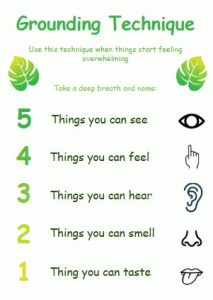
The 5-4-3-2-1 Grounding technique:
When your mind is racing with anxiety, grounding exercises help pull you away from your racing thoughts. Try to identify:
- 5 things you see (e.g. clock on the wall, plants)
- 4 things you touch (e.g. fabric, cold water bottle)
- 3 things you hear (e.g. birds, people talking)
- 2 things you smell (e.g. coffee, rain)
- 1 thing you taste (e.g.chewing gum, toothpaste)
Box breathing:
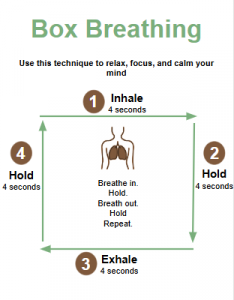
This is a rhythmic breathing technique used by everyone to instantly calm the nervous system.
- Inhale deeply through your nose for 4 seconds
- Hold for 4 seconds
- Exhale slowly through your mouth for 4 seconds
- Hold for 4 seconds
- Repeat this 3 or 4 times
Notice 3 walk:
Turn your daily walk or commute into a game! Challenge yourself to spot 3 things you’ve never noticed before on your route. Keep track of what you find, whether it’s an interesting building or a bird’s nest in a tree.
Mental Health and Mindfulness Resources
If you want to dive deeper into mindfulness or need support with your mental health in general, below are some helpful resources to explore.
- NHS Mindfulness Guide: Mindfulness – NHS – The NHS breaks down what mindfulness is, how it helps, and tips and tricks.
- Mind: A to Z of mental health | Information and support | Mind – Mind provides an extensive list of information for many mental health conditions.
- YoungMinds: Mental health conditions – YoungMinds offers information, resources, and contacts for young people struggling with their mental health.
- Samaritans: org – This is a helpline for those who are struggling and are looking for someone to talk to.